How Construction Management Software Enhances Collaboration and Communication
Construction projects in Life Sciences, Semiconductor, and Data Centre environments are among the most complex builds in the world. A single facility can involve dozens of trade contractors, engineering firms, and commissioning teams, all working against tight regulatory deadlines and tough quality standards. When information about scope, status, and defects lives in scattered spreadsheets, email threads, and paper punch lists, the cost is inefficiency and it’s a big risk to schedule, budget, and quality.
This is where purpose built construction management software like EIDA becomes so valuable. By giving every stakeholder a single, accurate source of truth, the platform turns collaboration from a constant chase for information into a built-in feature of how the project runs.
The collaboration problem on complex builds
On a large capital project, usually the same questions gets asked dozens of times a day: “What’s the status of that item?” Is a punch list item closed? Has the redline been incorporated into the drawing? Is the test pack ready for turnover? Without a shared system, the answer can really depend on who you ask, what version of the document they have, and how recently they walked the floor etc.
This creates three recurring problems:
- Fragmented communication. Trade contractors, general contractors, and end clients often work from different documents, different email chains, and different assumptions about current status.
- Delayed visibility. Issues surface late and sometimes not until commissioning or handover because there was no real-time way to flag them earlier. This is a big issue for CQV teams who can be often brought in later on the build.
- Accountability gaps. When an item isn’t tracked centrally, it’s unclear who owns the next action, which slows resolution and creates disputes during closeout.
How the right software closes the gap
Rather than relying on static drawings, disconnected trackers and siloed work groups, a platform like EIDA brings all the necessary information into one place. Anyone from a trade contractor on site to a project director reviewing progress remotely can see the same relevant information in the same place, at the same time. That shared context does more to align teams than a general status meeting can.
Structured, end-to-end punch management
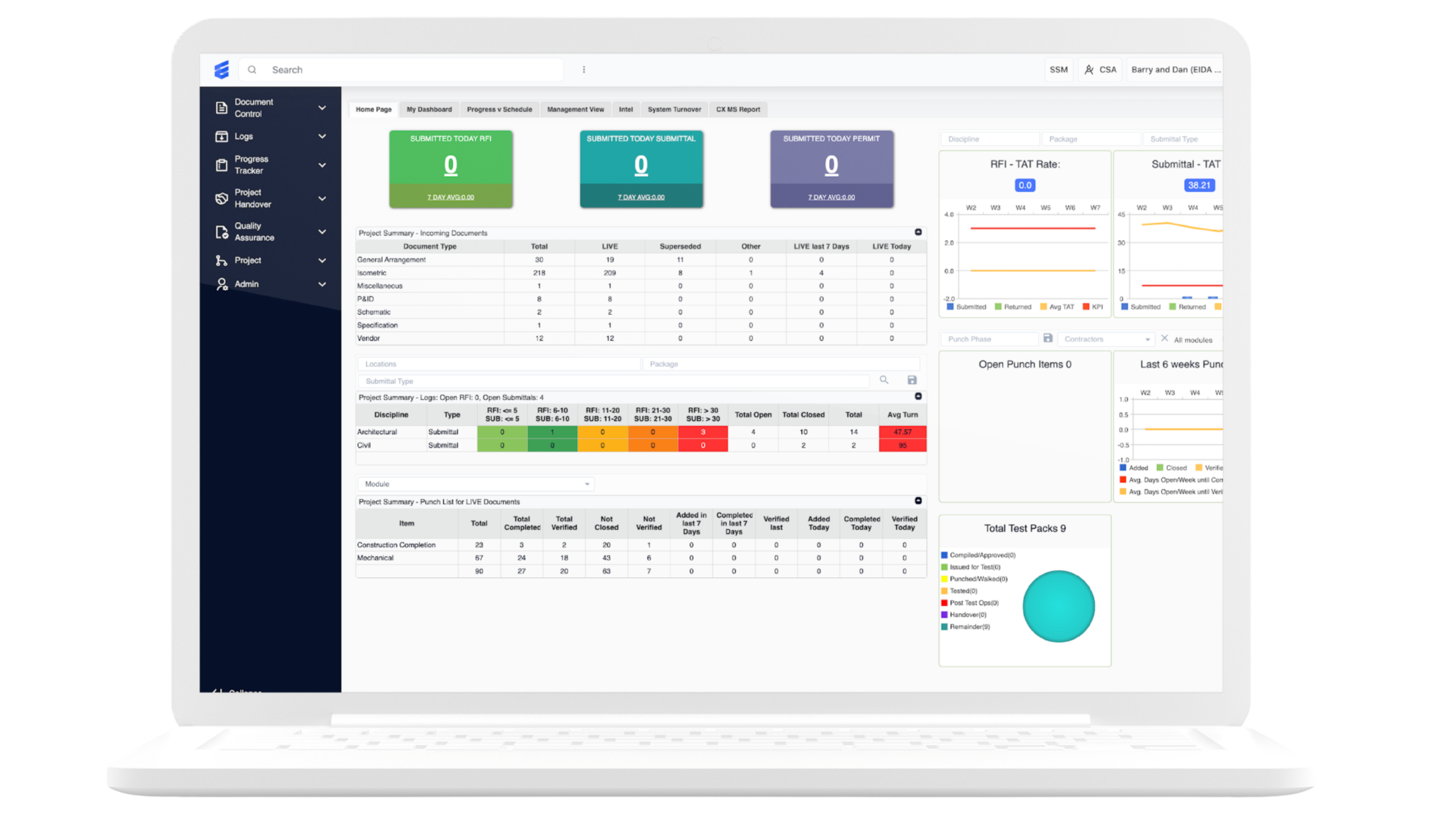
Punch management is often where communication breakdowns are most visible. A platform that supports the full lifecycle from creating a punch item, linking it to the relevant drawing or system, editing it as work progresses, and viewing its status at any point keeps trade contractors, main contractors, and clients working off the same list. No more reconciling three versions of a spreadsheet before a walkdown.
Real-time document control
Redlining, revision control, and document status tracking benefit enormously from being centralised on a platform like EIDA. When a field change is marked up once and instantly visible to engineering, QA, and the client, there’s no lag between what’s happening on site and what’s recorded in the system of record.
Smoother commissioning and turnover
Commissioning and turnover can be natural friction points, with test packs, systems, and handover packages (SSM) needing sign off from multiple parties simultaneously. A platform like EIDA structures this workflow rather than relying on spreadsheets and email approvals and gives every party the relevant visibility into what’s outstanding, what’s been accepted, and what’s blocking turnover. That transparency shortens the path to successful completion.
QA and accountability built in
When quality checks, inspections, and non-conformance tracking live in the same system as the rest of the project data, QA stops being a separate process bolted on at the end. Issues are visible to the people who need to act on them the moment they’re raised, with clear ownership and an audit trail which is valuable both for day to day management and for satisfying the documentation demands of these very regulated industries.
For Life Sciences and Semiconductor facilities in particular, the stakes around documentation and traceability are especially high. Regulatory bodies expect a clear, defensible record of how a facility was built, tested, and validated. Data Centre projects carry their own version of this pressure, with commissioning timelines directly tied to the all important revenue generating go live dates.
In these environments, better collaboration is risk mitigation and produces efficiency gains. Fewer miscommunications often lead to fewer rework headaches and faster and clear visibility into punch items and test pack status means there’s fewer surprises at turnover. A single source of truth like EIDA means less time spent reconciling conflicting records when regulators or clients come asking for the proof.
Construction management software doesn’t replace the expertise of the people running these projects but it does help remove the friction that keeps them from communicating clearly. By giving trade contractors, general contractors, and end clients a shared, real-time view of project status, platforms like EIDA help teams spend less time chasing information and more time building.
As the construction industry continues to digitise, the projects that move fastest and hit quality targets most consistently will be the ones where every stakeholder, regardless of role or location, is working from the same source of the truth.